Meet our new Policy Officer for Hull and East Yorkshire

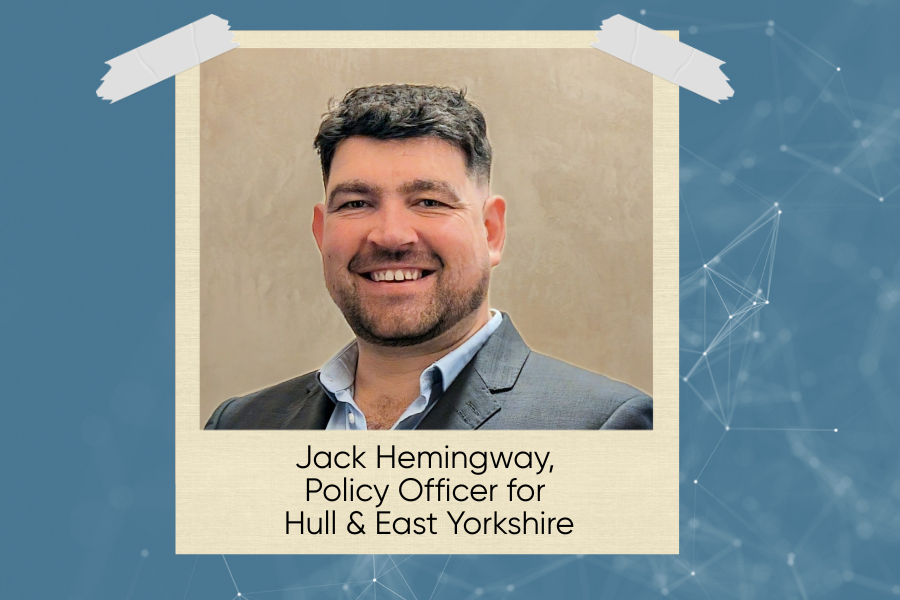
Y-PERN is delighted to welcome Jack Hemingway to the team as Policy Officer for Hull and East Yorkshire. In this new role, Jack will be working to strengthen connections between academic research and the people and organisations shaping policy across the region.

We sat down with Jack to find out what drew them to the role, how their experience has shaped their approach, and what advice they have for early career researchers looking to get involved in policy engagement. Read on to hear their thoughts.

What motivated you to take on this Policy Officer role for Hull and East Yorkshire?
I was really motivated by the opportunity to work at the intersection of research and place. Hull and East Yorkshire have a strong sense of identity and a unique set of opportunities and challenges, and this role offers a chance to connect academic expertise directly to those local priorities.

I was particularly drawn to the opportunity to support evidence-informed decision-making in a way that has a clear and tangible impact on the region, while also helping to strengthen links between the university and local partners.

How do you see your previous experiences shaping your approach to the work?
My previous roles have focused on translating research into clear, practical insights for non-academic audiences, particularly policymakers. That’s shaped a pragmatic and audience-focused approach, I tend to start with who the research is for, what they need, and how best to communicate it.

What have you learned about the role of evidence in driving and evaluating meaningful policy change?
I’ve learned that evidence is most influential when it is timely, relevant, and accessible. It can shape how issues are understood, support better decision-making, and help assess whether policies are working in practice. At the same time, evidence operates alongside other factors, so understanding the wider policy context is crucial to making it meaningful and actionable.

What principles or approaches guide how you collaborate with others – whether students, academics, or policymakers?
I try to keep collaboration open, practical, and grounded in mutual understanding. That means listening carefully, being clear about aims and expectations, and recognising the different priorities people bring. I also aim to make engagement as straightforward and useful as possible, so that collaboration feels worthwhile rather than an added burden.

And finally, what advice would you give to early career researchers who are just starting out in the policy engagement field?
Start small and stay curious. Think about who might benefit from your research and how it connects to real-world issues. You don’t need to be an expert in policy straight away, engagement is something you develop over time. Take opportunities where you can, build confidence in communicating your work clearly, and don’t hesitate to seek support from colleagues or policy engagement teams.
New report highlights concerns and optimism shaping attitudes to devolution in Yorkshire and the Humber

This report by the Yorkshire and Humber Policy Engagement and Research Network (Y-PERN) provides a unique study of how devolution has affected relationships between Strategic Authorities (SAs) and Local Authorities (LAs) across Yorkshire and the Humber during a period of considerable political and policy change. Working in partnership with Yorkshire and Humber Councils, Y-PERN researchers undertook a series of interviews with political leaders, chief executives, and senior officers in 2024 and 2025 to assess their views and reflections on the evolution of devolution across the region.

As with the rest of England, devolution across Yorkshire and the Humber has proven incremental, bespoke, and often incoherent in its evolution over 25 years, shaped more by power, politics, and financial incentives than a clear and consistent strategic vision. That said, Yorkshire and the Humber now have four Strategic Authorities (South Yorkshire, West Yorkshire, York and North Yorkshire, and Hull & East Yorkshire), completing the regional devolution map.

Our report indicates that prolonged uncertainties and emergent asymmetries in the organisation, scale, capacity, and coordination of devolution across the region have given rise to two dominant attitudes among political and policy leaders. A ‘devo-pragmatism’ underpins a broadly shared willingness to make devolution work, with extensive evidence that trust built through collaborative deal-making has shaped a collective desire to get on with delivering for communities and citizens.

At the same time, some interviewees expressed what we have called ‘devo-anxiety’ – reflecting growing concerns, particularly among local authorities, about the overall direction of devolution, with powers seen to be drifting upwards to Strategic Authorities. Frustrations were also expressed at the pace of change in devolution policy, with funding and capacity challenges frequently cited, alongside concerns that local authorities risk being sidelined in discussions about future devolution despite being the primary public service deliverers.

There was, however, broad support for regional-scale collaboration across Yorkshire and the Humber, without the need for a formal regional institution such as a ‘Yorkshire Parliament’. Interviews also surfaced concerns about the absence of a sufficiently clear and resonant collective regional voice to lobby Westminster and Whitehall for more powers and funding. Interviewees urged the UK Government to provide greater strategic clarity about devolution to support its future development across the region.

The report concludes with four recommendations: to further strengthen existing regional networks and partnerships to support policy innovation and delivery; to strengthen a collective regional voice to promote regional interests in Westminster and Whitehall; for local and strategic authorities to collaborate more closely on region-wide frameworks for policy evaluation, learning, and transfer; and for local and strategic authorities to work closely with universities to create evidence-informed approaches to devolution.

Dr Andy Mycock, Y-PERN’s Chief Policy Fellow based at the University of Leeds and co-author of the report, notes that the report “provides unique insights into the growing pains and positive impacts of devolution across Yorkshire and the Humber that will be of interest across Westminster, Whitehall, and strategic and local authorities across England.” He adds that, “as the UK Government’s English Devolution and Community Empowerment Bill progresses through Parliament, the research indicates that both ‘devo-pragmatism’ and ‘devo-anxiety’ are strongly shaping attitudes to future devolution across the region.”

Read the full report here

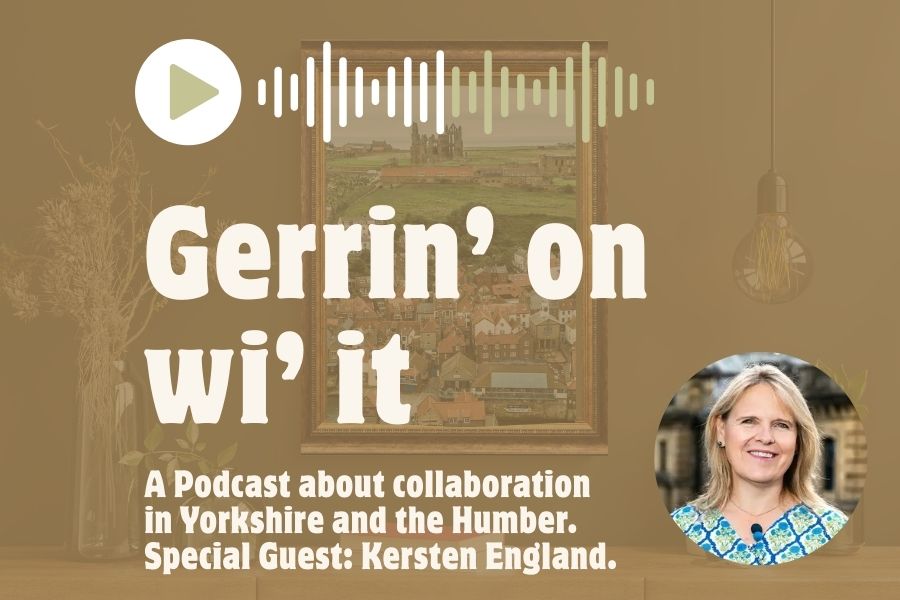
“Gerrin’ on wi’ it” Podcast Episode Six

In this episode of “Gerrin’ on wit’ it”, Paul Hayes speaks with Kersten England CBE about how collaboration drives meaningful change across Yorkshire and the Humber. Kersten reflects on major moments in her long career within local government and contributing to local, regional, and national conversations to influence decision-making processes. These candid reflections provide examples that emphasise why collaboration isn’t optional when tackling complex social situations – what works, what doesn’t, and what she would do differently as the region continues to build a more collaborative future.

Kersten explains why effective partnerships require deep listening, shared incentives, and a commitment to long‑term relationships. Paul and Kersten discuss the impact of initiatives such as YPIP and Y‑PERN, and they explore how universities, local authorities, and communities can work together more effectively.

Paul and Kersten unpack how to balance academic incentives with place-based needs to strengthen collaboration and how to embed genuine, non-transactional relationships across sectors. The conversation highlights the importance of governance, strong networks, capacity building, and sustainable resourcing.

About the Speakers

Kersten England CBE currently serves as Chair of Bradford 2025 (UK City of Culture) and Chair of the Young Foundation – having recently stepped down as Chief Executive of Bradford Council and Chair of Yorkshire & Humber Councils. She has over 30 years of experience in local government leadership across Kirklees, Calderdale, and York.

Paul Hayes is Senior Policy Engagement Fellow at Leeds University Business School, supporting academic colleagues in developing impacts from their work and in engaging with the policy community and public bodies. He was formerly corporate policy manager at Wakefield Council and policy lead for the Key Cities Group, an association of 27 mid-size UK cities. This role encompassed policy advisory work to local, regional and national politicians; development and authorship of local and regional strategies and plans; engagement with and representation on working groups of UK government and national bodies; and responses to consultations. The role also included scoping, commissioning, and joint development of academic and think tank research and engagement with business and voluntary and community sectors.

About the Podcast

“Gerrin’ on wi’ it” is a podcast series brought to you by YPIP, Y-PERN and the Leeds University Business school’s Research and Innovation podcast about collaboration in Yorkshire and the Humber which showcases the people, partnerships, and ideas driving collaborative change across the region. The title – a Yorkshire phrase meaning “getting on with it” – captures the spirit of practical, no-nonsense collaboration that characterises the region’s approach to tackling complex challenges. 

Hosted by Dr Andy Mycock and Paul Hayes, the series explores how universities, local authorities, combined authorities, and communities work together to address shared priorities – from economic growth and early years education to community wellbeing and regional development. At its heart, the podcast tells the story of Yorkshire and the Humber as England’s trailblazer for academic-policy engagement. 

Find out more about the series here

Download the transcript for this episode here

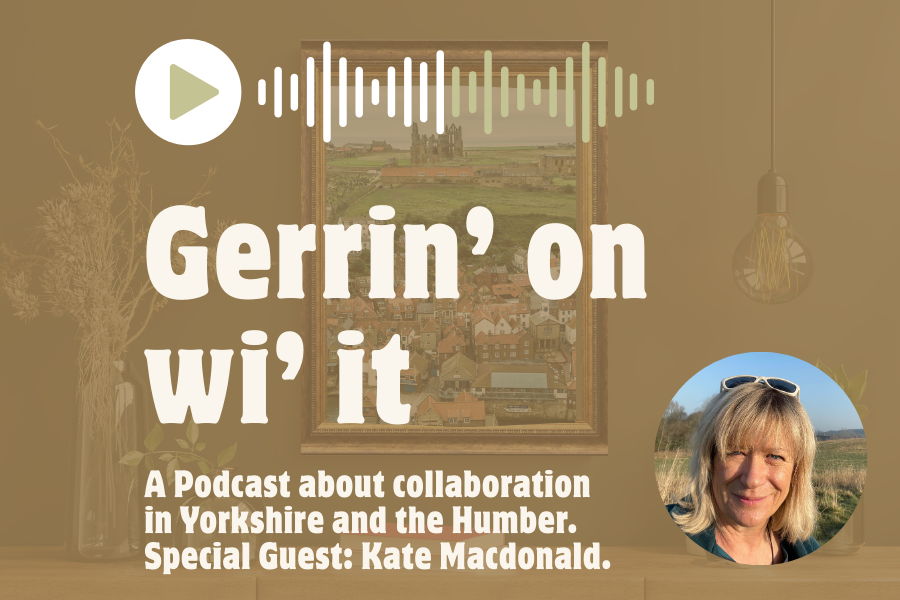
“Gerrin’ on wi’ it” Podcast Episode Five

In this episode of Gerrin’ on wi’ it, Paul Hayes sits down with community leader Kate Macdonald to explore what genuine cross‑sector collaboration really looks like in Yorkshire and the Humber. Drawing on decades of experience in academia, the NHS, and grassroots community projects, Kate discusses the challenges faced by the voluntary and community sector – from short‑term funding cycles to power imbalances and cultural misunderstandings. Together, they unpack why relationship‑building, trust, and equitable knowledge exchange are essential ingredients for meaningful co‑production, sustainable partnerships, and place‑based change.

About the Speakers

Kate Macdonald has over 30 years of experience in academia, NHS mental health services, and grassroots community projects. She has improved mental health services locally and regionally, including early psychosis care, and uses relational practice and systems thinking to foster trust, equitable collaboration, and human-centred solutions. She founded TimeBank Hull and East Riding, co-facilitates Hull Poverty Truth Commission, and is Development Coordinator for the Ideas Fund, connecting communities and researchers. She also leads the Community Panel for the Yorkshire Policy Innovation Partnership, championing inclusive approaches that enable communities to shape policy and co-create solutions.

Paul Hayes is Senior Policy Engagement Fellow at Leeds University Business School, supporting academic colleagues in developing impacts from their work and in engaging with the policy community and public bodies. He was formerly corporate policy manager at Wakefield Council and policy lead for the Key Cities Group, an association of 27 mid-size UK cities. This role encompassed policy advisory work to local, regional and national politicians; development and authorship of local and regional strategies and plans; engagement with and representation on working groups of UK government and national bodies; and responses to consultations. The role also included scoping, commissioning, and joint development of academic and think tank research and engagement with business and voluntary and community sectors.

About the Podcast

“Gerrin’ on wi’ it” is a podcast series brought to you by YPIP, Y-PERN and the Leeds University Business school’s Research and Innovation podcast about collaboration in Yorkshire and the Humber which showcases the people, partnerships, and ideas driving collaborative change across the region. The title – a Yorkshire phrase meaning “getting on with it” – captures the spirit of practical, no-nonsense collaboration that characterises the region’s approach to tackling complex challenges. 

Hosted by Dr Andy Mycock and Paul Hayes, the series explores how universities, local authorities, combined authorities, and communities work together to address shared priorities – from economic growth and early years education to community wellbeing and regional development. At its heart, the podcast tells the story of Yorkshire and the Humber as England’s trailblazer for academic-policy engagement. 

Find out more about the series here

Download the transcript for this episode here

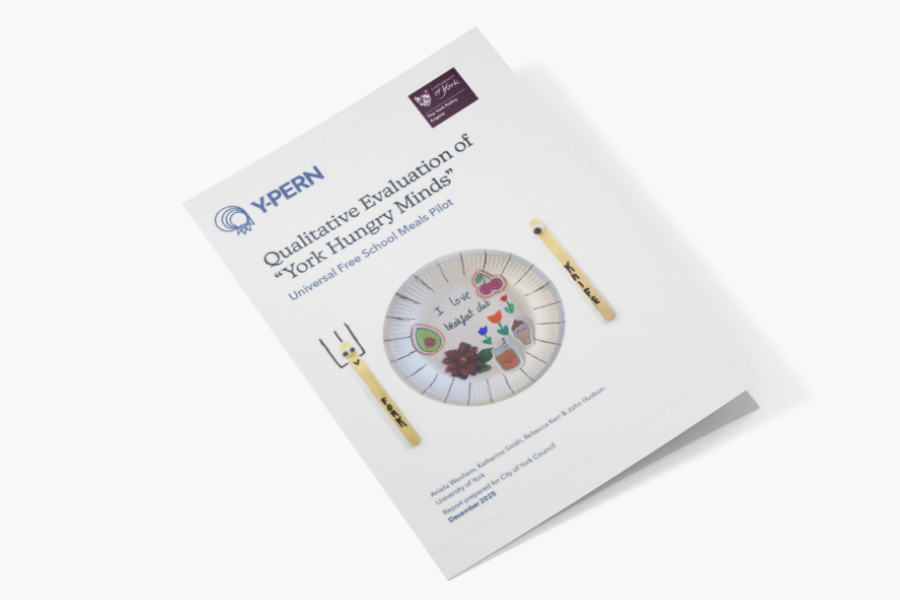
Universal Free School Meals Pilot Delivers “Far More Than Food,” University of York Research Finds

Y-PERN Policy Fellow Dr Rebecca Kerr co-authors the qualitative evaluation of City of York Council’s ‘York Hungry Minds’ pilot, finding wide-ranging benefits for children, families and schools.

A new evaluation of City of York Council’s “York Hungry Minds” Universal Free School Meals (UFSM) pilot has found compelling evidence of positive impacts on children’s education, wellbeing and in easing some family finances.

The report, presented in December 2025 for the City of York Council, was co-authored by Y-PERN Policy Fellow Dr Rebecca Kerr alongside colleagues Dr Aniela Wenham, Dr Katherine Smith and Professor John Hudson at the University of York and supported by the university’s Cost of Living Research Group. It evaluates the pilot at two York city primary schools – Westfield Community Primary School, offering universal free lunches, and Burton Green Primary School, offering universal free breakfasts.

Launched in January 2024 with approximately £100,000 of Council funding, the pilot aims to provide all primary school children at the two schools with a free school meal a day, removing means-testing to reach children in poverty while eliminating the stigma often associated with free school meal provision.

Dr Rebecca Kerr said: “What this evaluation shows is that universal free school meals deliver more than food. The evidence points to improvements in attendance, behaviour, concentration and wellbeing.”

The full report is available here