
Written by the Bradford Health Determinants Research Collaboration (HDRC)
The Bradford Health Determinants Research Collaboration (HDRC) funded by the National Institute for Health and Care Research (NIHR) is leading an innovative initiative that is redefining how local research priorities are established. While Areas of Research Interest (ARIs) are a recognised tool for aligning research with policy needs, they often reflect the perspectives of institutional stakeholders alone. In Bradford, we are pioneering a novel approach to align the ARIs of distinct stakeholders, local authority staff and residents by integrating their priorities into a single, unified statement. This process of creating Community Areas of Research Interest (C-ARIs) serves as a compelling case study for the academic-policy engagement community on effective co-production and research agenda-setting.
The Bradford Context
Bradford District is the fifth-largest Metropolitan Local Authority District in England and one of the youngest in the UK, with nearly one-third of the population aged under 20. It is a district of contrasts: while it includes some of the wealthiest areas in Northern England, it is also the fifth most income-deprived district in the country.
Formally recognised as a ‘City of Sanctuary’ and designated as the UK City of Culture 2025, Bradford’s rich cultural heritage and extraordinary diversity, with over 150 languages spoken—provide a unique landscape for community-led research. Our goal was to ensure that research challenges around the wider determinants of health were rooted in the lived experiences of this diverse population.
Methodology – Prioritisation workshops
We synthesised existing local evidence to identify themes related to the wider determinants of health, creating a list of Research Area Groups (RAG).
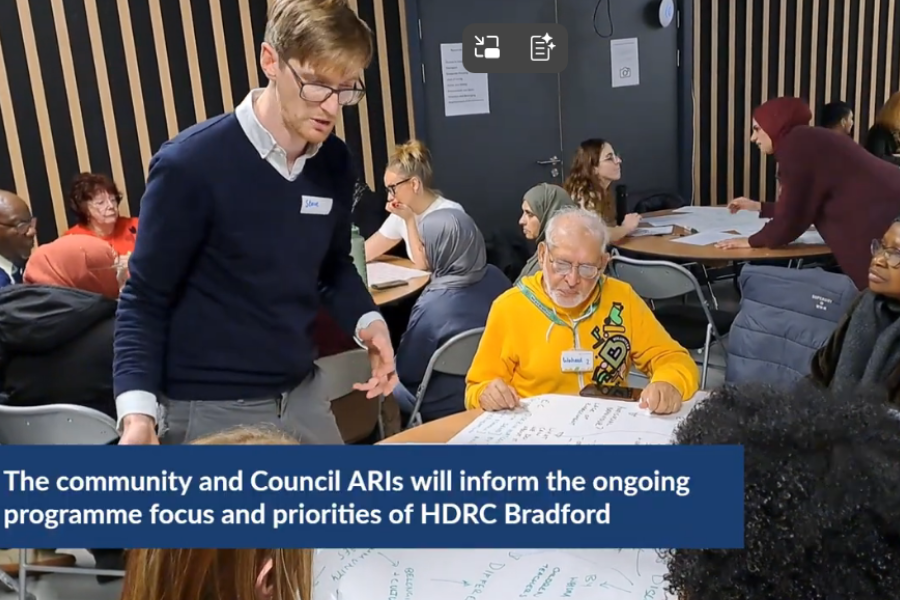
We held ten prioritisation workshops across the district, two per constituency, with ‘intentional selecting’ of micro-organisations, underrepresented groups and residents who policymakers rarely hear from, to develop the C-ARIs. We worked closely with council neighbourhood teams, local Public Contributors (resident representatives) and academic colleagues, to identify these groups and facilitate the prioritisation activities. In workshops we conducted a DIAMOND ranking exercise to prioritise the RAG areas in order of importance and draw out key challenges and positive future actions under each RAG.
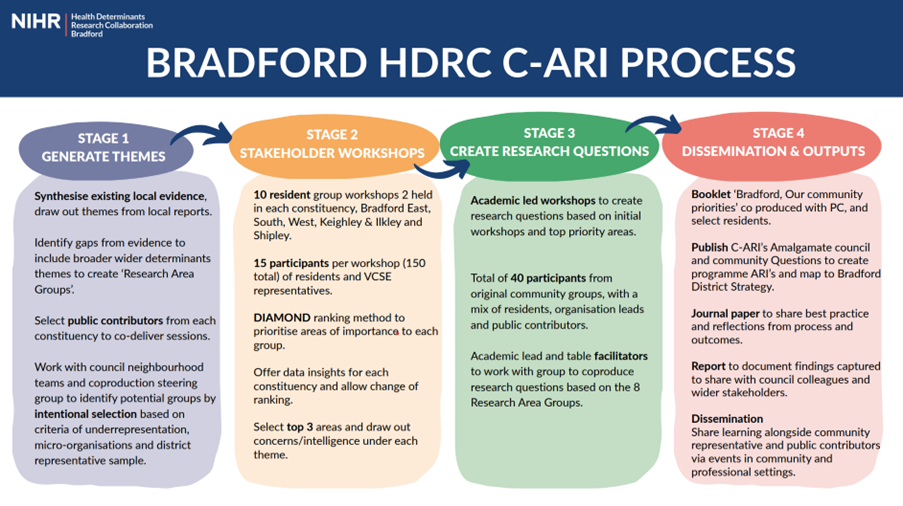
Figure 1 Community Areas Research Interest – C-ARI Visual
Findings: What matters to communities?
The prioritisation process revealed clear community concerns. ‘Crime and Safety’ was identified as the top priority by 50% of residents, followed by the ‘Cost of Living’ and ‘Access to Education’. Residents across various constituencies highlighted challenges including easy access to drugs, road safety concerns, cost of university, and the mismatch between wages and rising living costs. Suggested actions included improving police visibility, implementing a living wage, introducing life‑skills education in schools, and increasing fines for anti‑social behaviour. Participants also emphasised the importance of community‑led initiatives, such as intercultural events to build cohesion, reduce fear and address anti‑social behaviour through positive, and community‑driven campaigns.
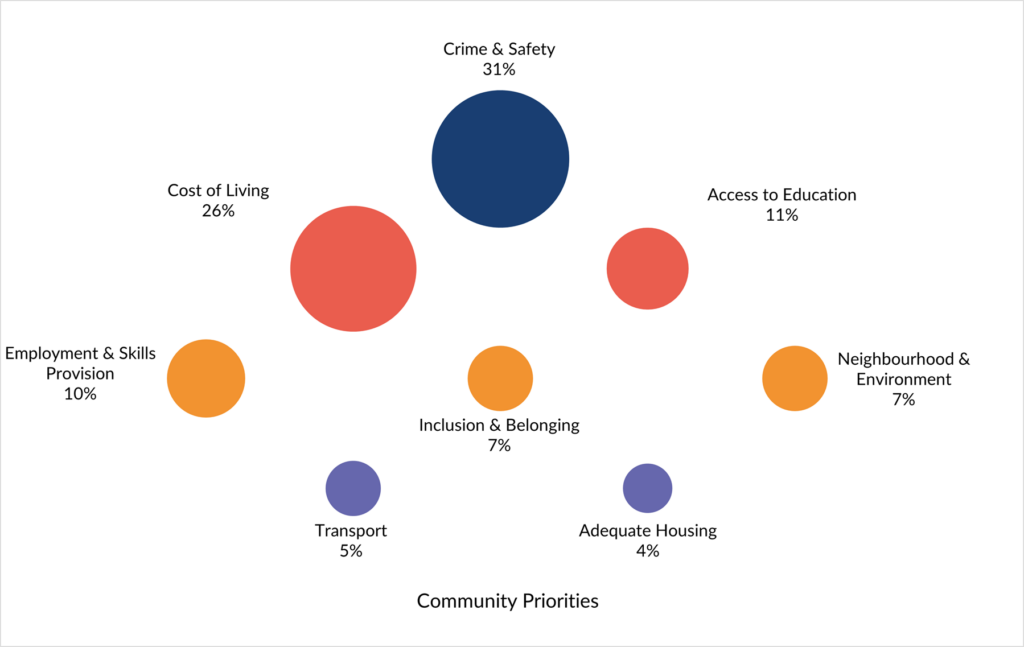
Figure 2: Combined Priority 1 and priority 2 scores for RAG
Academic Led Question Generating Session
Following the workshop data collection phase, we held an academic led Question Generating Session designed to translate the C-ARIs into a future research agenda. This collaborative event brought together over 40 participants including 10 community groups and residents who had participated in our community priority workshops.
During the session, we carried out an evidence safari where we presented the collated insights gathered from earlier workshops and co-generated key research questions shaped from a community lens.
Bradford District C-ARI
Thanks to this collaborative effort, we created 30 broad Community Areas of Research Interest (C-ARI) questions under the eight RAG headings, with corresponding granular level sub questions representing individual and group level contributions. The C-ARI questions are additionally mapped to Bradford District Plan’s strategic outcomes of Growth and Regeneration, A Great Place to Grow up, Happy and Healthy People and Safe and Strong Communities, marking an important step in ensuring that Bradford districts’ research agenda is both community-driven and impactful.
The next key step has been to bring together the C-ARI questions and priorities with those gathered from council staff Areas of Research Interest. We seek to create a unified picture of research priorities across the district, demonstrating how complex and competing issues can be aligned to generate research that delivers genuine system and community level benefit, directly informing local policy.
Bradford’s experience highlights a crucial missing link in the academic–policy landscape and our final published C-ARIs open the door for academics to collaborate with Bradford in a way that is both responsible and transformative. While national ARIs and Council ARIs hold strong value, without community voice those impacted the most by policy choices go unrepresented.
Our Learning
Developing the C-ARIs was a resource-intensive but essential process. In line with ActEarly’s co-production principles and our PPIE strategy, we embraced the ‘messiness’ that meaningful co-production requires by:
Adaptive Design: We remained responsive to participant needs, such as shifting workshops into community languages in real-time to ensure full contribution.
Question Generating: Some participants found research‑question development challenging, and discussions sometimes circled back to familiar issues. Facilitators would have benefited from additional preparation time, particularly to deepen their understanding of the data and strengthen guidance at key decision points.
Inclusive Environments: Success relied on trusted relationships and inclusive facilitation to translate community insights into meaningful academic engagement.
What Success Looks Like
Our ambition is not simply to publish priorities, but to see them activated, shaping research, informing decisions, and improving lives across the district. Success for Bradford’s C-ARIs is defined by how well this work continues to bridge community insight with policy and academic action and we welcome collaboration if your work aligns with any of our C-ARI.
Success will be defined by:
- Rapid Mobilisation: Seeing small-scale evidence-mobilisation and student research projects (Masters and PhDs) address our ARIs.
- Joint Bids: Developing collaborative research bids between academics, residents, and community organisations to ensure involvement throughout the research cycle.
- Dual Lens: Encouraging academics to approach research projects by considering policy priorities alongside the daily lived realities of residents.
By bridging the gap between community insight and academic action, HDRC Bradford has established a foundation for ethical, impactful research responsive to what communities genuinely want and need.
Please get in touch with us if you would like to work with us on our on our ARI/C-ARI [email protected].