
Written by Lauren Cox and Kate Winship
This project was led by Lauren Cox, YPIP Comms and Engagement Manager and supported by Kate MacDonald, YPIP Co-Investigator and CEO of Timebank Hull and East Riding, Paul Hayes, Senior Policy Engagement Fellow at University of Leeds, Andy Mycock, Y-PERN Chief Policy Fellow, Ciaran Cummins, Engagement Lead at Involve UK and Kate Winship, Y-PERN Communications Officer.
How to Approach a Cultural Shift
Yorkshire Policy Innovation Partnership (YPIP) is all about bringing together academics, decision makers, and communities to harness the power of collaborative research and innovation to address local challenges with informed policy making.
When thinking about the legacy of the project, we recognise that to truly make an impact on creating a shift to this way of working, we need to go beyond intentions of collaboration and community involvement. Therefore, we want to explore the skills, knowledge and confidence needed by Yorkshire stakeholders to feel they can influence the things that matter to them.
Following many repetitive conversations within our network, it was deemed important to get a group of people with different perspectives and experiences of policy in a room to discuss honestly how policy really works, and more importantly, how it could work differently.
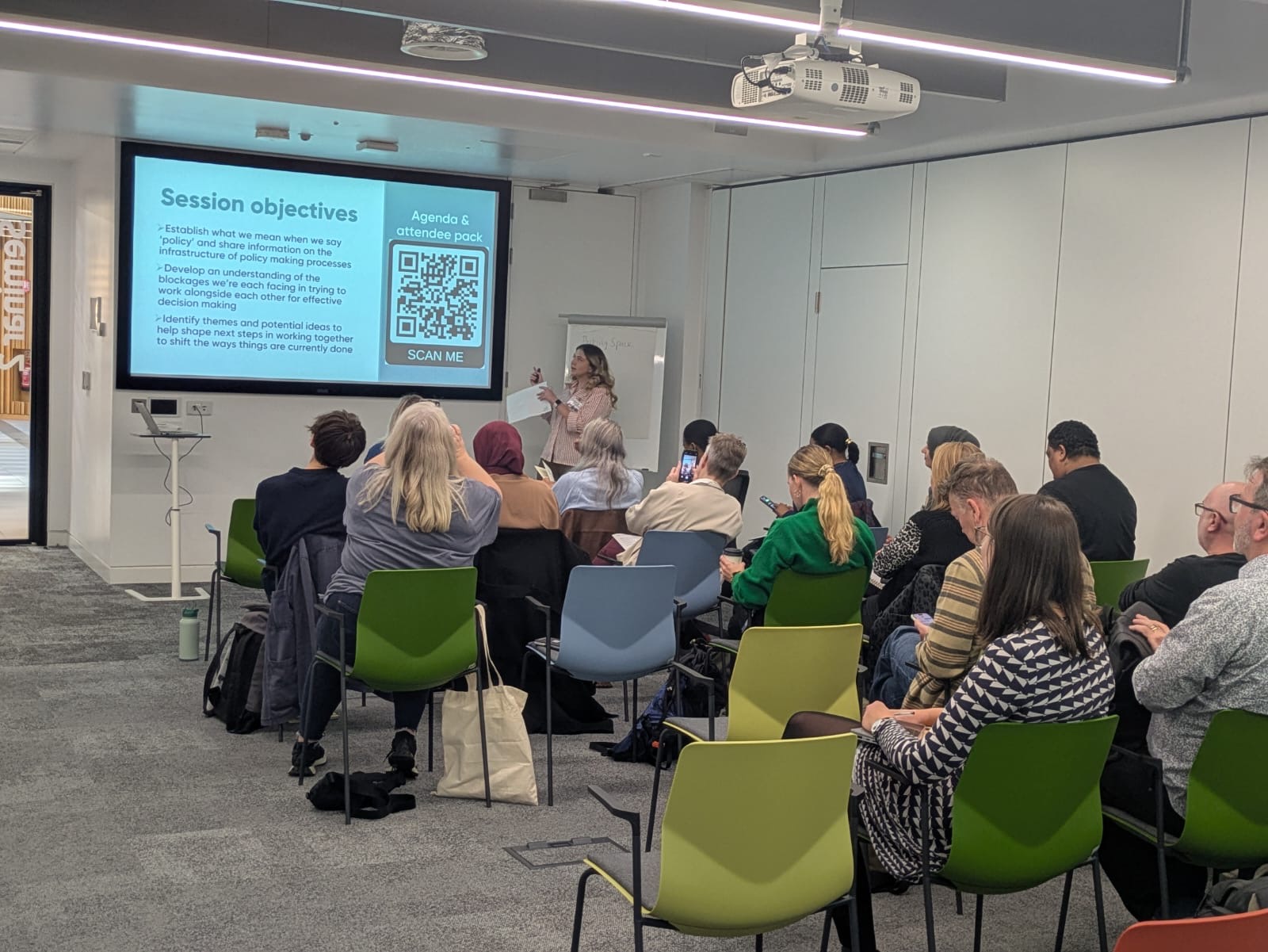
Setting out the session objectives and approach to the day
We set out two objectives: to build both trust and relationships.
Together representatives from academia, policymaking, and community organisations would engage in conversations that would help increase awareness and understanding of policy and the policy process.
The invitation to delegates asked them to think collaboratively on how these processes could be shifted and changed to work better for our shared desired outcomes of community-led research and informed decision-making. The idea being to go beyond accepting ‘that’s just how it is’.
Challenging “That’s just how it is”
The conversations within our network have consistently thrown up many barriers to understanding policy, so it was easy to identify three topics for discussion:
- Inaccessible language – Members of the public and those in the voluntary sector are facing barriers of inaccessible language and unclear routes to influence, as shared by our YPIP Community Panel members.
- Changing Priorities – Those working in statutory decision-making organisations are operating within unstable systems where political and personnel changes can shift the priorities and culture.
- Equitable and Effective Delivery – Researchers aren’t often trained in policy engagement and typically research topics are led by academia, rather than being driven and delivered by communities.
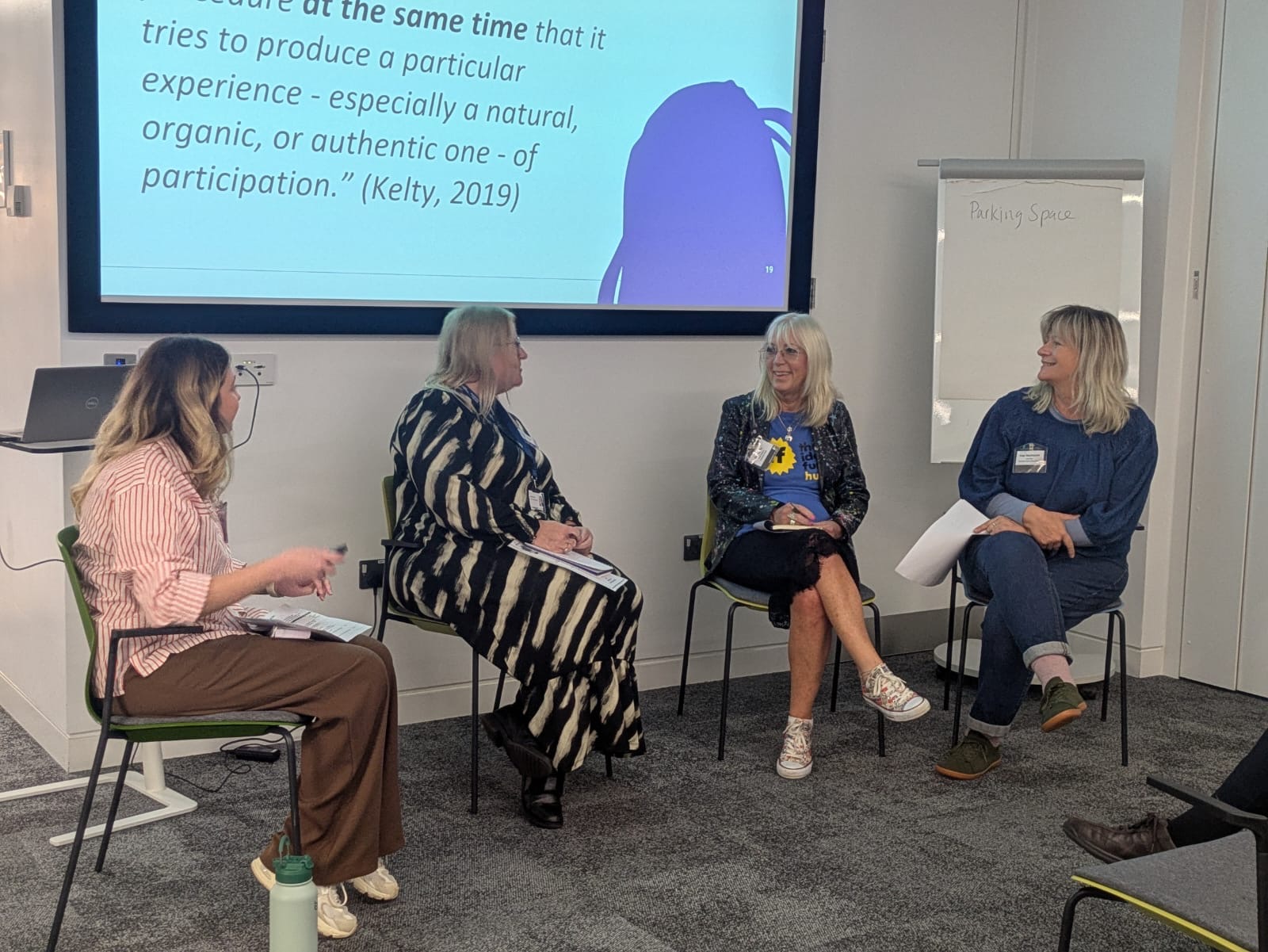
Panel discussion hearing about HDRC Wakefield, The Ideas Fund, Hull Poverty Truth Commission and YPIP Community Panel
Who was and wasn’t in the room
The organising group invited delegates that covered the 3 stakeholder groups across the region. Approx 70 people were invited including members of the YPIP Community Panel.
Our small but mighty group of 27 attendees spanned representatives from Hey Smile Foundation and Timebank Hull and East Riding from East Yorkshire, Doncaster, Bradford, and Wakefield councils, University of Leeds and York St. John University. The group were diverse and for some it was a unique opportunity to have these different perspectives under one roof.
“The successful bringing together of people from all sides of the academic-policy-community triangle, is where conversation meets innovation” – Faye, HDRC Doncaster
There was a clear recognition that there were key stakeholder groups missing from the session. This included those with perceived ‘power’ like politicians, funders, and senior roles in policymaking. These groups were identified as equally needing to be treated as a ‘hard to reach’ group, and we need to be exercising the same principles of engaging other ‘hard to reach’ groups to ensure we gain access to these actors and bring them into these spaces. We need to create a balance where those with influence and perceived ‘power’ are not the only voices in decision-making spaces, and that they are present in collaborative spaces to listen and understand the needs of stakeholders and include these actors in the decision-making process.
Young people’s voice and experiences were also missing from this discussion, and it was felt necessary to get their early buy-in to help drive equitable actions going forward.
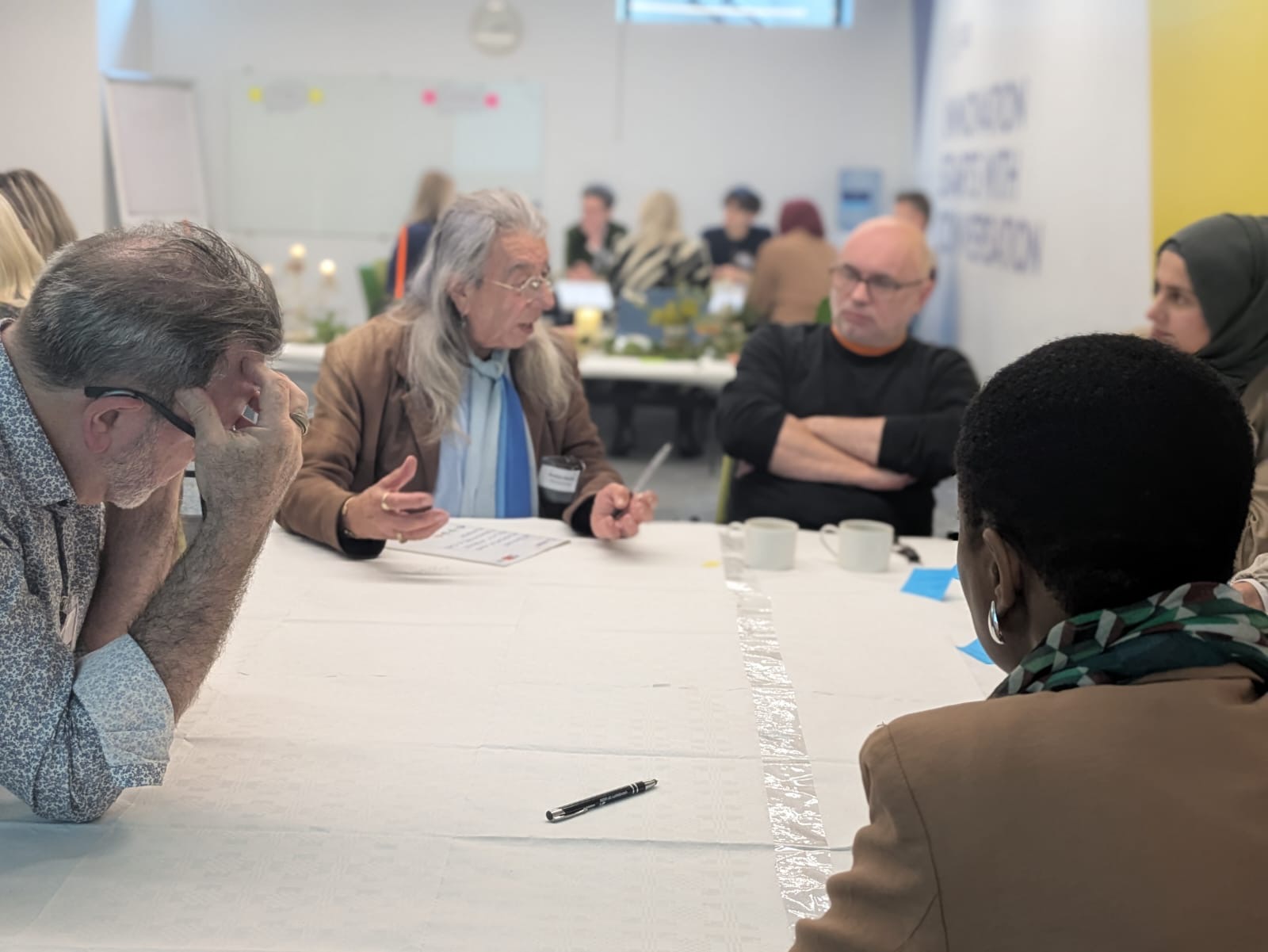
Table discussion on how we can be working alongside each other and working together to identify common themes
Understanding Policy Perspectives
As there is a need to understand where people are coming from on policy questions and challenges, the approach for the session was centred around reciprocal sensemaking and deeper listening to one another’s experiences. Delegates were invited to share their realities in relation to policy, and to consider what can be done to create shifts in effective and informed decision making.
The session demonstrated this approach by starting with a presentation to de-mystify policy and the policy process and led onto a summary of the trends coming through for this type of work and examples of existing practice. These discussions were built on with panel discussion sharing the work of HDRC Wakefield, The Ideas Fund, Hull Poverty Truth Commission, and the YPIP Community Panel.
The Long Table Discussion
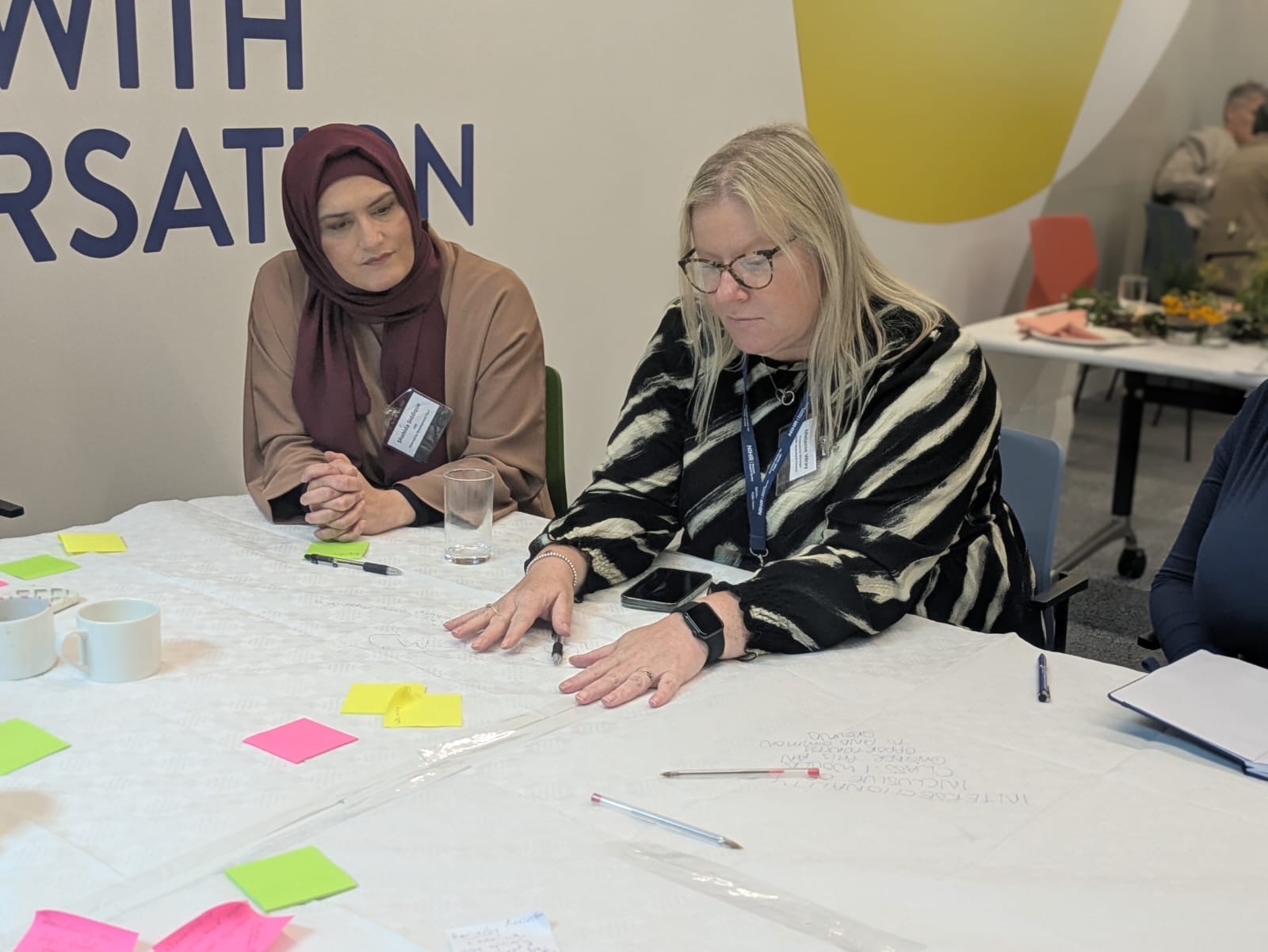
During the session, members of the group engaged in a Long Table exercise in a dinner party setting to share their experiences and perspectives of barriers they have faced when making collaborative and informed decision-making happen, including the roles of culture, resources, bureaucracy etc. The exercise questioned that when something goes well in making progress in this space, what is stopping it from shifting to mainstream practice. Furthermore, if we’re wanting to go beyond ‘that’s just how it is’, what elements of existing work and resources are helpful for this. This vulnerability was essential. As attendees noted, people need to be willing to be uncomfortable, to feel safe enough to challenge and be challenged. By stripping away the lanyards, egos, and silos, the Long Table created conditions for genuine dialogue about what prevents good intentions from becoming sustained practice.
“The session was a valuable space to explore real community challenges, learn about policies, and understand the importance of working together with other local communities and organisations. It also highlighted positive stories and practical skills in cultural awareness and leadership.” – Lalinca, YPIP Community Panel
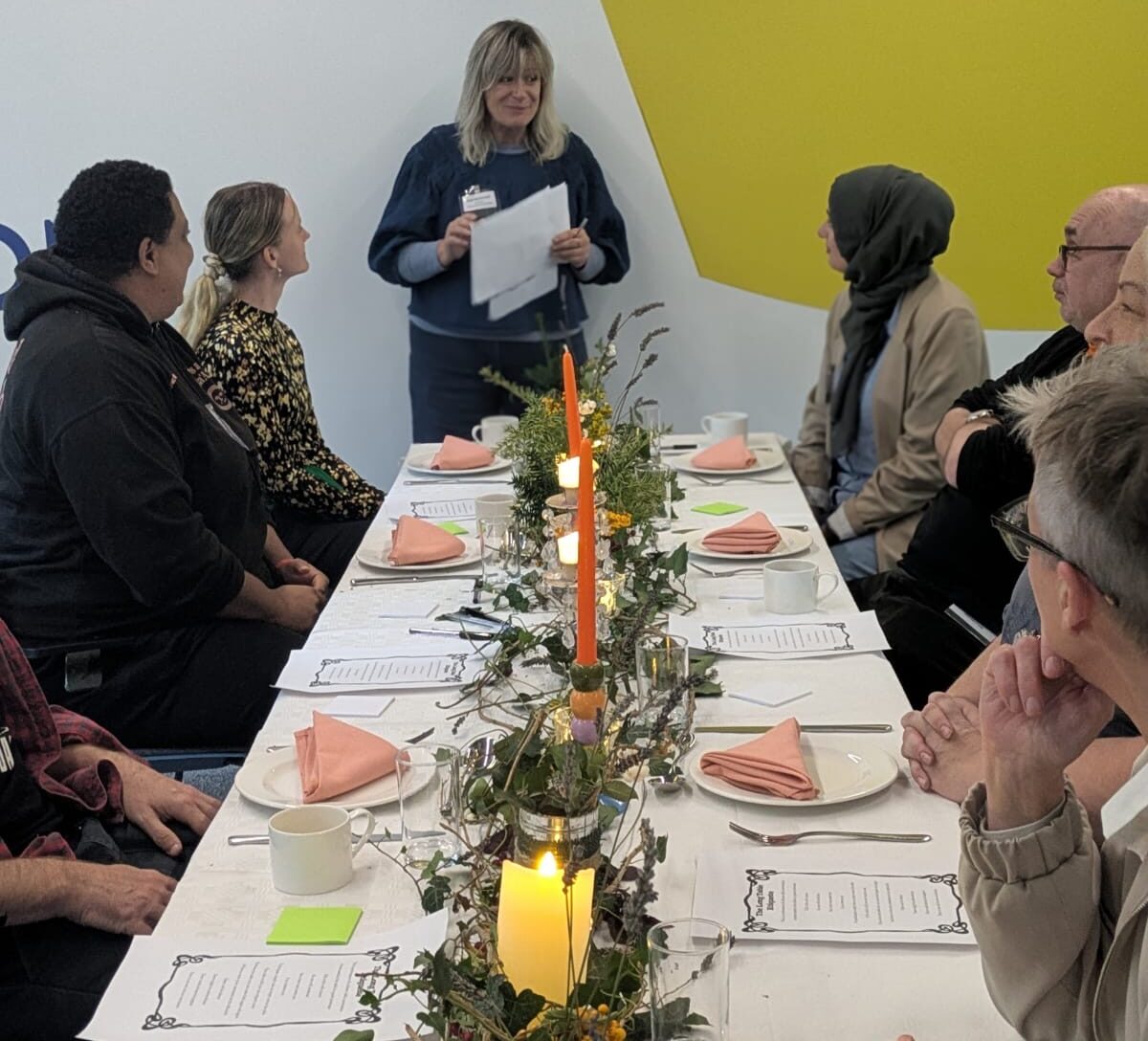
The host explaining how the Long Table will work
During the final part of the day the group identified common themes that are creating blocks for them and what could be done to change and shift things. There was an ask of the individuals, their team or organisations as to what they could do to support in taking ideas forward, and to also think about who was not in the room who would be valuable to these conversations and subsequent actions.
“The session highlighted the importance of creating lasting links between community voices and decision-makers. I’m motivated to contribute and help turn discussions into tangible outcomes.” – Maya, YPIP Community Panel.
As a result of the discussion, the delegates vowed to make pledges on how they could contribute to move things forward, or to share ideas on where else these conversations could be taken (e.g. into influential spaces or existing forums and networks who are also exploring these topics).
Pledges were made to:
- Facilitate relationship building and matching with researchers on shared subject interests through University Policy Engagement Network (UPEN)
- Share examples of how the HDRC embed public involvement through their research cycles
- Host information sessions on the Guiding Principles from ‘Working Together in Research’ from South Yorkshire collaboration which capture the key themes from the programme, where communities and researchers shared ideas and experience of what it looks and feels like to work together effectively on health and care research
On reflection, the day was a success – but we understand that the privileged position we hold in the academic sphere enables us to convene this diverse group of people and analyse the policy sector.
Working in place for policy innovation is the direction of travel that central funders and academia seem to be taking. When thinking about the legacy of YPIP and supporting future work, we wanted to take a step back to ensure that stakeholders have the understanding and confidence to be effectively working in these spaces; knowing what’s being asked of them, managing expectations by building better understanding of where each other are coming from, and being able to challenges systems when their involvement feels restricted or tokenistic. This session highlighted that there’s drive from all sides to work alongside each other and produce better outcomes and services for our local areas.
This work is hard and is up against the current centralised systems structure, but we can all learn from one another on ways forward through strengthening relationships and nurturing trust.
If you’re interested in being in the room during our next session, please complete this doodle poll with your availability
Check out the agenda and attendee pack produced by the organising team with resources on policy and policy making, and examples of existing practice in this space.
This blog is the first of a series of blogs following on from our policy session. Next up is: “The Triangle That Works: When Academics, Policy-Makers, and Communities Actually Listen”