
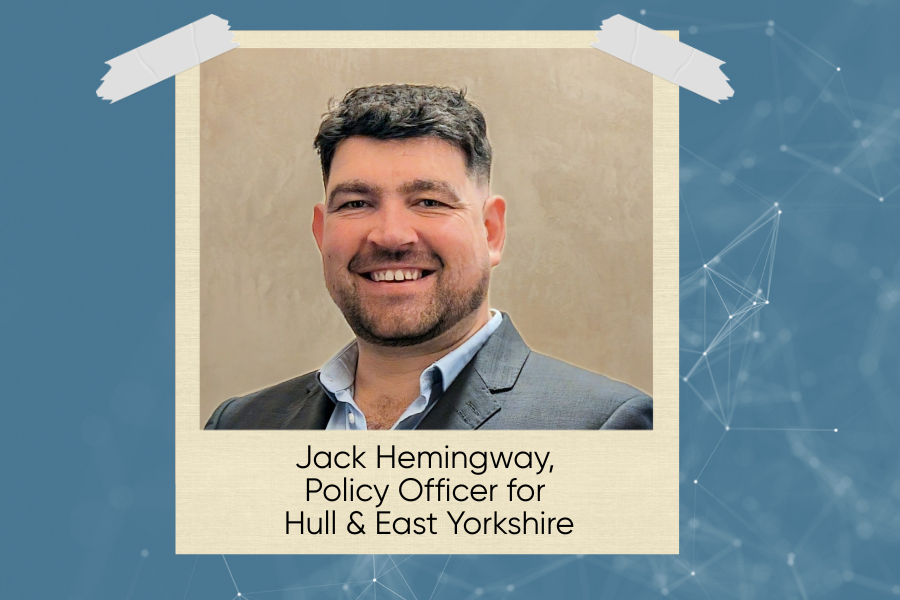
Y-PERN is delighted to welcome Jack Hemingway to the team as Policy Officer for Hull and East Yorkshire. In this new role, Jack will be working to strengthen connections between academic research and the people and organisations shaping policy across the region.
We sat down with Jack to find out what drew them to the role, how their experience has shaped their approach, and what advice they have for early career researchers looking to get involved in policy engagement. Read on to hear their thoughts.
What motivated you to take on this Policy Officer role for Hull and East Yorkshire?
I was really motivated by the opportunity to work at the intersection of research and place. Hull and East Yorkshire have a strong sense of identity and a unique set of opportunities and challenges, and this role offers a chance to connect academic expertise directly to those local priorities.
I was particularly drawn to the opportunity to support evidence-informed decision-making in a way that has a clear and tangible impact on the region, while also helping to strengthen links between the university and local partners.
How do you see your previous experiences shaping your approach to the work?
My previous roles have focused on translating research into clear, practical insights for non-academic audiences, particularly policymakers. That’s shaped a pragmatic and audience-focused approach, I tend to start with who the research is for, what they need, and how best to communicate it.
What have you learned about the role of evidence in driving and evaluating meaningful policy change?
I’ve learned that evidence is most influential when it is timely, relevant, and accessible. It can shape how issues are understood, support better decision-making, and help assess whether policies are working in practice. At the same time, evidence operates alongside other factors, so understanding the wider policy context is crucial to making it meaningful and actionable.
What principles or approaches guide how you collaborate with others – whether students, academics, or policymakers?
I try to keep collaboration open, practical, and grounded in mutual understanding. That means listening carefully, being clear about aims and expectations, and recognising the different priorities people bring. I also aim to make engagement as straightforward and useful as possible, so that collaboration feels worthwhile rather than an added burden.
And finally, what advice would you give to early career researchers who are just starting out in the policy engagement field?
Start small and stay curious. Think about who might benefit from your research and how it connects to real-world issues. You don’t need to be an expert in policy straight away, engagement is something you develop over time. Take opportunities where you can, build confidence in communicating your work clearly, and don’t hesitate to seek support from colleagues or policy engagement teams.