

Refugee and Homelessness Policy: Deterrence versus Prevention 

Written by Y-PERN Policy Fellow Pratichi Chatterjee

Housing is the bedrock of a good life and is recognised as part of the right to an adequate standard of living, in the Universal Declaration of Human Rights. Access to decent and stable housing, however, is far from reality for many people. New refugees are among those groups in the UK who face acute challenges in securing good accommodation following a successful asylum claim.  

Rough Sleeping among those who have left Home Office asylum accommodation spiked in December 2023. This followed the former Conservative administration’s efforts to speed up decision-making on asylum claims and reduce the ‘move-on’ period – the time new refugees have to leave asylum accommodation and find their own housing following a positive decision.i These changes saw more people exiting the asylum system, with some having only 7 days to find housing in a context unfamiliar to them.  

Why are new refugees at heightened risk of homelessness? 

Homelessness and housing precarity among new refugees, however, is not only the result of recent decisions. Rather, the challenges reflect systemic problems, with research and campaigners claiming that the UK’s asylum and immigration policies which its emphasis on deterrence, drive destitution and create challenges for migrants, in general, and refugees, in particular, when they try to find housing. Multiple factors contribute to this reality.  

There has been a near complete ban on employment for people seeking asylum since 2002, reflecting policy aims to deter people from coming to the UK for economic purposes by ‘abusing’ the asylum system. But this decision has negatively impacted the financial independence of people seeking asylum and deprived them of the benefits of work. Down-stream this presents as increased risk of homelessness following the grant of an asylum claim. Data analysed by the Migration Observatory shows that two thirds of decisions on an asylum claim reached in 2024, had taken a year or more, and 50% of initial decisions had taken between 1 – 1.5 years, indicating that most people will have spent over a year without formal employment whilst awaiting a decision on their claim. People who are refused can appeal the decision or reapply, extending the time spent in the asylum system, barred from employment. Data suggests that this time in the system will likely be lengthened for many, as refusals are on the rise, with 2024 seeing a 40% increase in refusals compared with the previous year.  
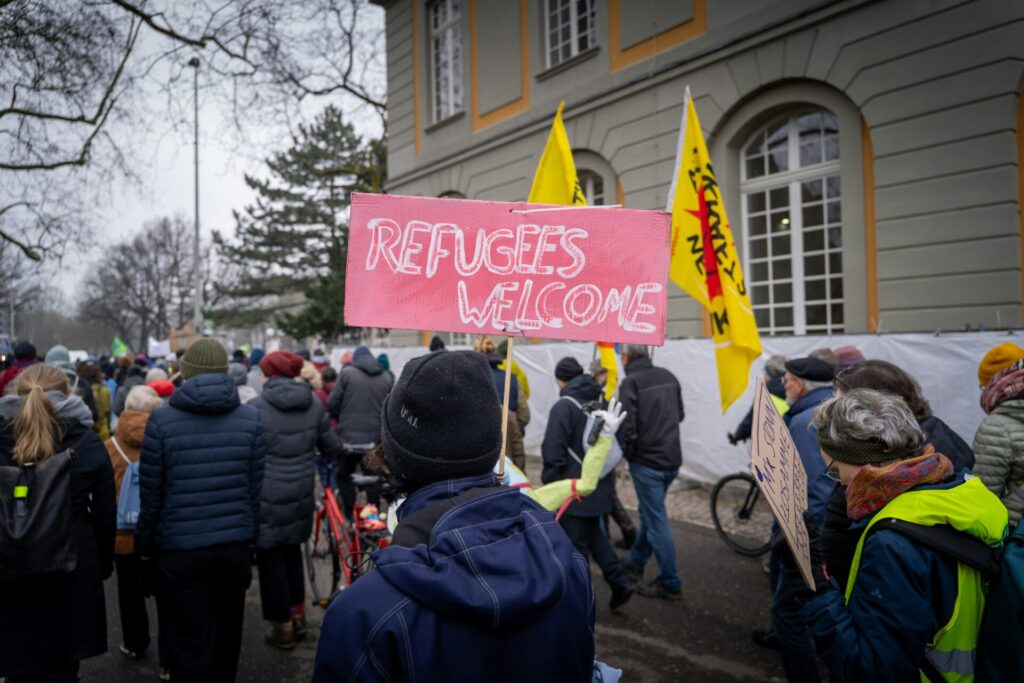
Photo by Mika Baumeister on Unsplash

The asylum process can be isolating and destabilising, a direct consequence of policies designed to indirectly deter people arriving in the UK by restricting social and welfare support. Where people are housed in remote under-served locations, as seen in the case of many contingency hotels, access to services like legal aid, healthcare, education and community support is challenging. Developing vital language skills, for those who need it, is also restricted during this time, with English language teaching not funded for the first 6 months of waiting on a decision, and subsidies of 50% of course costs covered afterwards. Compounding the situation is the disruption to services and social relations, with many people being moved, sometimes multiple times, during the asylum process. 

The ban on work and uneven access to services and support take away from people’s chances to build a stable life after their claim is granted. This is acutely seen in the ‘move-on’ period, when newly recognised refugees, previously in receipt of government support, have 56 days to vacate their accommodation. While the time frame is an improvement on the previous 28-day notice period, it is nonetheless a short time to ground oneself in a new life, find employment, access housing and apply for welfare in administrative systems that are unfamiliar. The experience can be profoundly disorientating.  

Effective communication across multiple institutions – Home Office contractors managing asylum accommodation, local authorities and integration services – is critical to supporting people at the ‘move-on’ juncture. But third sector professionals and people with refugee status who spoke with us, during our work, claimed that a fragmented approach, poor communication and language barriers resulted in some people not knowing about the statutory homelessness support or universal credit provision that they are eligible for. Exacerbating the difficulties is the limited access to legal aid. Over half of legal aid providers were lost between 2005 and 2018 leaving people to navigate homelessness and welfare systems without the input of formal expertise.  

Where people are able to access welfare support the benefits are limited, as many will be young, for whom the housing element of universal credit is restricted to the shared accommodation rate. For major cities across Yorkshire and Humber indicative estimates place the shared housing allowance rate at between £70 to £96 per week. This cohort of single people under 35 are also unlikely to be classed as ‘priority need’ under statutory homelessness provision, meaning that local authorities have no duty to offer them accommodation, although other support like discretionary housing payments may be available. While the situation is shared by others in the UK who face homelessness, new refugees are acutely impacted, because they are more likely to be new to the country and may not have the social support systems that can come to their aid in this time. Furthermore, recent research suggests that some landlords are reticent to rent to refugees or migrants because of fines imposed by ‘Right to Rent’ legislation.

How does this sit with preventing homelessness?  

Statutory obligation on local authorities introduced in 2018 under The Homelessness Reduction Act were intended to place prevention at the centre of efforts to tackle homelessness, including by enabling local authorities, public services and the third sector to better collaborate. In West Yorkshire, all local authority housing strategies/plans reflect this focus on prevention, by prioritising issues like successful homelessness prevention, reducing homelessness and rough sleeping, and early intervention. The West Yorkshire Combined Authority’s Housing Strategy similarly identifies increased support for local authorities to tackle homelessness as an important outcome for the region. 

The current organisation of the asylum system is out of step with these ambitions to prevent homelessness expressed at national, regional and local government level. In West Yorkshire itself, between 2022/2023 and 2023/2024 local authorities saw a 73% increase in the number of people to whom they owed a homelessness ‘prevention duty’ to who listed leaving asylum accommodation as the reason for the loss of their housing. 

What can be done?  

Organisations and researchers working in the homelessness and migration sectors have made several recommendations to reform the asylum system and related support. Some of their recommendations include: 

  • Providing support systems from ‘day one’iii directed at enabling people to (re)build their lives and contribute to the places they live in. Accessible English language and skills training as part of this. 
  • Develop a coordinated and integrated ‘move-on’ processv with local authorities, the migrant sector, the homelessness sector and Home Office contractors. Adequately resource this process, including through the provision of key workers and support for better communication across relevant sectors, as well as with new refugees.  

As we see it, central to these calls is a need to re-balance the emphasis of policy, away from deterrence, a key plank of asylum and immigration policy, and towards prevention, a core principle in homelessness policy. The shift will go a long way towards improving housing outcomes for new refugees. 

Y-PERN would like to thank pratichi and her colleagues at the University of Huddersfield for their research work in this area.

iFollowing a successful asylum claim, a new refugee is given a notice period, referred to as the ‘move on’ period, to vacate their asylum accommodation and find new housing. In 2023 the Home Office changed how the move-on period of 28 days was calculated, resulting in it being reduced to 7 days for some cases. The move-on was increased to 56-days in December 2024 on a trial basis until June 2025, by the Labour Government. 

ii Mort, L. and Morris, M. 2024. Transforming Asylum Accommodation. Institute for Public Policy Research. Available at: https://www.ippr.org/articles/transforming-asylum-accommodation. Accessed 23 May 2025.  

iii ibid 

iv Asylum Matters. 2020. Lift The Ban: Why Giving People Seeking Asylum The Right To Work is Common Sense. Lift the Ban. Available at: https://lifttheban.co.uk/. Accessed 23 May 2025. 

v Homeless Link and NACCOM. 2025. Vital solutions to ending migrant homelessness. Homeless Link. Available at: https://homeless.org.uk/knowledge-hub/policy-briefing-vital-solutions-to-ending-migrant-homelessness/. Accessed 23 May 2025. 

vi Refugee Council. n.d. Private Rented Scheme. Available at: https://www.refugeecouncil.org.uk/get-help/private-rented-scheme/. Accessed 23 May 2025. vii NACCOM. 2023. Working With Housing Associations: A Toolkit. Available at: https://naccom.org.uk/wp-content/uploads/2023/10/NACCOM-HousingToolkit_2023-10-05_DIGITAL.pdf. Accessed 23 May 2025. 

viii Brown, P., Gill, S., Halsall, J., Simcock, T., & Agbokou, A. (2024). Homelessness, refugees and resettlement. Centre for Homelessness Impact. Available at: https://www.homelessnessimpact.org/news/critical-links-between-resettlement-in-the-uk-and-rising-rates-of-street-homelessness. Accessed 23 May 2025.  
How our region harnessed university power to boost capacity

This article was originally published on Lgcplus.com. The version below features a minor edit.

A unique collaboration between universities and local government in Yorkshire and the Humber has provided policy support for councils across the region, write former Bradford City MBC chief executive Kersten England and Paul Hayes, senior policy engagement fellow at Leeds University Business School.

The capacity of local government to develop effective strategic and policy responses to the big challenges of our time, such as climate change, inclusive growth and fracturing levels of community cohesion, is very unevenly spread across our sector.

Austerity has hollowed out corporate centres, especially for smaller authorities. In a time which can charitably be described as an ‘interesting’ economic, social and policy environment, there is a clear need for local government to continue to respond effectively on behalf of the communities they serve.

Universities can be a key resource and partner for local and combined authorities. Universities are anchor institutions, but also sources of rigorous research and advice, and potential co-producers of solutions. Many sub-regions of the UK have a largely untapped asset for their region in the excellent research of their universities.

Building the infrastructure

The government wants universities to play a greater role in places. Education secretary Bridget Phillipson wrote to all vice chancellors in November asking them to “ensure local communities and businesses benefit fully from your work” and to work “in partnership with local government and employers to shape and deliver economic and social change”. The devolution white paper sets out an expectation that universities will play a larger role within and alongside combined and mayoral strategic authorities.

Whilst many councils and combined authorities have collaborated with their local universities in the past, this has mainly been for one-off projects and without a systematic framework which allows councils to tap into wider academic knowledge or support on a continuing basis. In Yorkshire and the Humber we have been building the infrastructure for this to happen over the last five years.

This will particularly benefit authorities without a physical university presence.

In Yorkshire and Humber alone, there are 12 universities across the region, with over 15,000 academics and many disciplines in which the research undertaken is recognised as world class.

In 2021, the Yorkshire and Humber Councils Group, composed of the then 22 councils across the region, signed a memorandum of understanding with Yorkshire Universities – the coordinating body for the region’s universities. This was the first agreement of its kind and set out a shared commitment for joint working to deliver greater prosperity and well-being for the people and places of the Yorkshire and Humber region.

Sustaining relationships

An early deliverable from this was Y-PERN, the Yorkshire and Humber Policy Engagement & Research Network. This £4m project, funded by Research England, has led to 11 policy fellows from universities supporting combined authorities and councils by not only providing direct academic input into projects – such as the growth strategies of combined authorities, work on the childcare and early years ecosystem within West Yorkshire, female entrepreneurship in North Yorkshire and the poverty truth commission in Hull – but also acting as knowledge brokers and connectors, allowing local areas to identify academic expertise across the wider region to meet their local issues. This role continues to grow, and will particularly benefit authorities without a physical university presence.

Y-PERN is also conducting research and working with local government across the region on issues such as the next stage of devolution and graduate retention. More importantly, it is building and sustaining relationships between higher education and local government, acting as both a regional resource and as an exemplar for other parts of the country.

The network is supporting the Yorkshire and Humber policy officers network, bringing together local and combined corporate policy specialists from across the region, as well as conducting events to bring together early career policy officers with academics. The aim is not only to stimulate collaboration, but to mainstream it across every local authority and every university within the region.

The foundations built through Y-PERN have helped the region secure an additional £5m of research council funding for the Yorkshire Policy Innovation Partnership, Y-PIP. This funding has created a Local Policy Innovation Partnership that involves all Yorkshire universities and addresses inclusive growth, sustainable living and data analytics, with a focus on marginalized communities and places.

Rebuilding capacity


At a more local level, a formal collaboration between the University of Leeds and Leeds City Council, involves the council and university agreeing a series of ‘Areas of Research Interest’, the first established at local government level. Since its inception this has led to 18 collaborative projects including work around culture, food systems, safety in parks and inclusive growth and over £1m of funding targeted to areas where LCC has identified the most need.

In Bradford the City of Research approach anchored by Born in Bradford (the world’s largest longitudinal study of childhood development) has lead to over £80m of investment from UK Research Councils, non-departmental public bodies such as the Arts Council, Sport England, the Big Lottery, government departments and research foundations such as Wellcome. This collaboration has provided critical evidence and support for policy making around issues such as tackling air pollution, childhood obesity, planning guidelines for neighbourhoods, food systems and early diagnosis of autism with proven savings to public services over the life course of individuals.

There are also four Health Determinants Research Collaboration authorities in Yorkshire and the Humber (Bradford, Doncaster and Wakefield MBCs and North Yorkshire Council). This is a significant investment in rebuilding the research appetite and capacity within those local authorities.

The work across the Yorkshire and Humber region is by no means mainstream, but it is gathering speed and making a difference, particularly around creating opportunities for places lacking their own physical university presence. Mayors, local authority leaders and vice chancellors continue to show commitment to developing and sustaining these relationships.

Local government has a key role as convenor and place shaper, bringing together partners to improve places, lives and opportunities. Strong and active partnership with the university sector can only help secure our ambitions, both at local and regional scale.

Kersten England was chief executive of Bradford City MDC from 2015 to 2023. She is currently Director of Engagement at the Yorkshire Policy Engagement & Research Network (Y-PERN). 

What does it mean to be an economist?

Economics is sometimes still seen as being the preserve of an exclusive group of specialist experts; but to address the complex challenges that society faces, we must draw in a wider, more diverse range of perspectives into the space – argue members of the Y-PERN team, including Tom Haines-Doran, Rebecca Kerr, Jamie Morgan and Andrew Brown.

Conventional thinking sees economics as a specialist discipline, very distinct from other areas of enquiry and debate. A classic divide is politics from economics. While TV and press news platforms typically lead with the politics of the day, economics tends to be reserved for a section towards the end. The language is different too: while editors make an effort to make political news intelligible to its target audience, financial reporting is replete with esoteric language, which assumes a high degree of financial literacy not possessed by the vast majority.

“As the Y-PERN project continues, we aim to show that a pluralistic approach to economics, that welcomes rather than ‘colonises’ diverse academic disciplines, can be even more inclusive and relevant to real world policy challenges.”

– Tom Haines-Doran, Rebecca Kerr, Jamie Morgan, Andrew Brown and the Y-PERN team

The form of this separation also implies that, while politics is a legitimate arena of mass debate and discussion – a situation presumably necessary for liberal democracies to function – economics is not. Understanding economics, by contrast, is for experts with the right training. And while these experts might have the credentials to play in this exclusive casino, none of us has the ability to re-write the house rules. Whereas politics can change – sometimes dramatically – the fundamentals of the economy tend to be presented as ever-present and natural.

In the academic world, the separation between economics and other disciplines has a remarkable history, in three phases (our brief account below adapts that of Ben Fine.)

“Academic experts in, say, employment relations, education, or sociology often do not see themselves as ‘economic experts’ …. [yet] their knowledge counts as economic knowledge which can be used in economic applications.”

Y-PERN team

The evolution of economics

The roots of modern economics lie in the ‘marginalist revolution’ towards the end of the 19th Century, which created a situation whereby economics could claim to describe the functioning of the economy, while the other social sciences’ role was to explain everything ‘non-economic.’ This meant a bifurcation between economics and the rest of social science. For those in the latter camp, economics could not be incorporated into to their methodology, except as a taken-as-given outside influence on social phenomena.

The revolution did not take hold immediately but by the mid-twentieth century, marginalist economics had become firmly established as definitive of economics per se: a highly technical and mathematical ‘science’ of optimising individuals and firms, of perfect markets, and efficient market equilibrium. At its core was the notion – often rejected by other social sciences – that people in an economy are no more than individuals out to optimise their ‘utility’ (or hedonistic pleasure) through rational decisions in market transactions.

PHASE 2: From roughly the 1950s to the 1970s academic economics remained in this form largely isolated from other disciplines but with notable exceptions: public choice theory in politics, cliometrics in history, and the economics of education. These exceptions treated the non-market world exactly like a perfect market. They were the first form of what has been termed ‘economics imperialism,’ a form superseded by the phase that followed.

PHASE 3: Thanks to its success within its own field, and to important ‘tweaks’ in its content, standard economics was, from about the 1980s onwards, able to import its techniques and assumptions to resolving non-market questions. It did so typically through relaxing one or more standard assumption whilst retaining the others, e.g. a shift from ‘perfect’ markets (where agents are assumed to know everything), to ‘imperfect’ markets (where they are not). Returning to the field of politics, this phase has seen the widespread application of game theory.

A new public face or one-way street?

In the development of phase 3 in the last 20 years or so, more and more standard economics assumptions have been relaxed in one or other branch or application, including the assumption of optimising individuals. We have agent-based modelling, behavioural and happiness economics, (nudge theory) social capital theory, and so on. These are applied to a wealth of new kinds of data, often ‘throwing in’ a mix of variables – some that derive from optimising principles others that do not, for example in applications new growth theory.

These latest developments have given economics a new public face, in popular books such as Freakonomics, and led some to question if there is any core theory to mainstream economics beyond a general insistence on mathematical modelling. However, through our work in Y-PERN, we have found that the separation that began with the marginalist revolution has been nuanced and hidden, but not bridged. In particular:

  • the core marginalist economics principles, centred on optimising individuals, remain dominant at the interface between economics and policy.
  • economics continues to be regarded as a specialism only understood by highly trained practitioners, such that the breaking out of this core to other social sciences is still typically a one-way street.

The need for new perspectives

This creates significant problems for any project such as Y-PERN. Y-PERN’s mission statement is to connect and convene expertise across Yorkshire’s sub-regions to meet local policy demand and local expertise. Inevitably this leads us to consider fundamental questions of economics, simply understood as the study of the production and distribution of natural and human-produced resources. Most obviously, where public services are concerned, there are questions about who should get what and how, and how this will be provided and paid for, and by whom?

These are not just questions for the economics discipline. Depending on the specific public service in question, then a wide range of disciplinary expertise will be relevant – to take the example of childcare provision then this requires sociological, psychological, educational and employment relations expertise. Two difficult questions must therefore be answered:

  • How, in practice, can diverse disciplines be brought together when they respectively involve opposing underlying assumptions (e.g. qualitative vs quantitative, individualistic vs wholistic)?
  • Marginalist economics, as its name implies, applies best to small-scale (marginal) change, so what form of economics and what form of interdisciplinary synthesis should be undertaken for cases of large-scale (‘non-marginal’ or ‘transformational’) change?

Rising to complex challenges ahead

To meet these challenges Y-PERN champions a pluralistic approach – which means taking advantage of the full depth and breadth of systems-based and place-based academic expertise across Yorkshire and the Humber, regardless of disciplinary origin, and inclusive of multiple approaches to economics. A pluralistic approach that is both quantitatively and qualitatively rigorous, that integrates individuals and social structures, can play an important role in helping local and regional authorities make public policy decisions.

Our pluralistic approach is not without challenges. Recent experience in creating calls for evidence for local policy partners has found some reticence from our academic colleagues in ‘non-economic’ fields to take part. Academic experts in, say, employment relations, education, or sociology often do not see themselves as ‘economic experts’, despite the undoubted importance of economics in policymaking in their fields’ attendant spheres of application. We have at times found it difficult to persuade experts that their knowledge counts as economic knowledge which can be used in economic applications.

Yet, the complex policy challenges we face – e.g. planetary collapse, inequality of wealth and of health, and ongoing austerity – are, we believe, undermining previously commonsense notions of what does and does not count as economics and economic evidence. As the Y-PERN project continues, and looking towards its longer-term impacts, we aim for our practice to show that a pluralistic approach to economics, that welcomes rather than ‘colonises’ diverse academic disciplines, can be even more inclusive and relevant to real world policy challenges.

The Y-PERN team is planning to explore the issues discussed in this blog further as part of upcoming events and workshops. You can find out about these by signing up to our newsletter – or you can visit our webpages if you’re already interested in getting involved in Y-PERN.

Academics from any field are also welcome to reach out to the authors to discuss the points raised in the blog or submit a comment below.